Calling Visa to Indonesia

Calling Visa to Indonesia 2024

Not all foreigners can enter Indonesia. There are certain nationalities that need authorization from Indonesian authorities before applying for a visa. Furthermore, what requirements do you need to obtain that visa? Get to know all about a Calling Visa here!   What Is A Calling Visa? A Calling Visa is for some nationalities that require authorization from the Indonesian Immigration Authority prior to applying for a visa to enter Indonesia. Therefore, in Indonesia, not all foreigners can enter Indonesia.  A Calling Visa country is a country whose condition is considered to have a certain level of vulnerability in terms of political, economic, social, cultural, ideological, defense and security aspects, and immigration aspects.   Foreign nationalities that strictly require a Calling Visa to visit Indonesia are as follows: Afghanistan Cameroon Guinea Israel Liberia Nigeria North Korea Somalia.  Once the authorization is accepted, the applicant can apply for a Visa.  However, there is no guarantee that you will obtain authorization from the authority although our team has already made efforts to obtain it.    Requirements for Obtaining a Calling Visa For foreigners from the listed countries above, you should meet these requirements as follows: Completed visa application form. Original and copy of passport with a minimum validity of 6 (six) months and required at least 2 (two) blank pages available. Employment letter where the applicant is working. Letter of guarantee from a company in Indonesia. Applicant’s CV. One recent passport-size color photograph with white background. Identity card or arrival / white embarkation card.  Other related documents.   How to Obtain a Calling Visa? Submit all above-mentioned requirements along with payment of telex fee in cash. When an application is approved, the applicant shall return to the embassy for visa issuance by producing an original passport, visa approval letter, identity card, or arrival/white embarkation card for foreign visitors. Make payment in cash and non-refundable. The process takes approximately 3 working days once the application is deemed complete. Should an interview be required, the application may take a longer time to process, a maximum of 14 (fourteen) working days up to approval. Incomplete application submission may result in a delay in the service process. Note that:  An applicant must have a sponsor in Indonesia, either an organization or a company. Sponsor can apply online at: https://visaonline.imigrasi.go.id/online. The sponsor must have a photocopy of the applicant’s passport, a supporting letter from the sponsor, and photographs of the applicant. Other documents may be required and determined by the Immigration authority. Examining the e-Visa application for nationalities of the calling visa country involves an assessment team that consists of: Ministry of Law and Human Rights. Ministry of Home Affairs. Ministry of Foreign Affairs. Ministry of Manpower. The National Police of the Republic of Indonesia. Attorney General’s Office. State Intelligence Agency. The Indonesian National Army Strategic Intelligence Agency and, National Narcotics Agency. If you need more information regarding the Calling Visa, please contact SAM Consulting with a professional team ready to help at any time. Furthermore, SAM Consulting has a 10 years proven track record of handling international clients.   Do you need our help? Please contact us by WhatsApp  

Indonesia Family Dependent Visa E31

Indonesia Family Dependent KITAS Visa (E31 Series) – Complete Guide 2026

The Indonesia Family Dependent KITAS Visa (E31 Series) allows foreign nationals and their family members to legally live together in Indonesia under structured family-based residency pathways. This visa category includes multiple sub-types designed for: spouses children parents dependent family members Whether you are relocating to Bali with your family, joining your spouse in Indonesia, or applying for dependent residency under a Work KITAS or Investor KITAS, understanding the Indonesia Family Dependent KITAS Visa is essential for legal compliance and long-term residency planning. Unlike tourist visas, the Family Dependent KITAS provides long-term legal residency with multiple-entry benefits and family reunification pathways. This complete guide explains: E31 dependent visa categories spouse and child sponsorship KITAS vs dependent visa differences requirements and eligibility family relocation rules work restrictions FAQs foreigners commonly search for What Is Indonesia Family Dependent KITAS Visa? The Indonesia Family Dependent KITAS Visa is a Limited Stay Visa (VITAS) issued to family members of: Indonesian citizens KITAS holders KITAP holders foreign residents legally living in Indonesia After arrival in Indonesia, the visa is automatically converted into: e-ITAS (Electronic Limited Stay Permit) Multiple Re-Entry Permit (MERP) This allows eligible family members to: – Live legally in Indonesia – Stay long term with family sponsorship – Enter and exit Indonesia freely – Access education and family residency benefits In simple terms, the Family Dependent KITAS is Indonesia’s official family residency permit system. Types of Indonesia Family Dependent KITAS Visa (E31 Series) Indonesia provides a wide range of dependent visas under the E31 category, each designed for specific family relationships. E31A – Spouse of Indonesian Citizen The E31A visa is issued to foreigners legally married to Indonesian citizens. This visa commonly provides: 1–2 year stay permit multiple re-entry access family-based residency sponsorship What E31A Allows – Live in Indonesia legally – Travel freely during validity – Join spouse long term – Access family residency pathway Marriage must be legally recognized and registered in Indonesia. E31B – Spouse of KITAS / KITAP Holder The E31B visa is designed for spouses of foreign residents holding: Work KITAS Investor KITAS Student KITAS Retirement KITAS Golden Visa What E31B Allows – Join spouse legally in Indonesia – Live long term – Travel freely during visa validity E31C – Child of Indonesian Citizen This visa applies to children born from legal marriages where one parent is Indonesian. What E31C Allows – Live in Indonesia – Access education – Travel freely – Stay legally with parents E31D – Stepchild of Indonesian Citizen The E31D visa applies to stepchildren of Indonesian citizens. Common Requirements birth certificate family documents proof of legal marriage between parents E31E – Child of KITAS / KITAP Holder This visa is designed for dependent children of foreign residents in Indonesia. What E31E Allows – Stay legally with parents – Study in Indonesia – Access long-term family residency E31F – Adopted Child of Indonesian Citizen The E31F visa applies to legally adopted children. Common Requirements Indonesian court adoption decision family documentation sponsorship documents E31G – Parent of Indonesian Citizen This visa allows parents of Indonesian citizens to live in Indonesia under family sponsorship. E31H – Parent of KITAS / KITAP Holder This visa allows parents to join foreign resident children living legally in Indonesia. E31J – Dependent Sibling (Minor) The E31J visa applies to unmarried minor siblings dependent on residents in Indonesia. Indonesia Family Dependent KITAS Duration Most E31 family-dependent KITAS categories commonly provide: Stay Duration 1 year or 2 years (extendable) Extensions depend on: sponsor validity immigration compliance relationship eligibility Visa Validity vs Stay Duration This is commonly misunderstood. Visa Validity The visa must usually be used within: 90 days from issuance Stay Duration The stay period begins after entering Indonesia and KITAS activation. Visa validity and stay duration are NOT the same. What You Can Do With Indonesia Family Dependent KITAS Dependent KITAS holders may: – Live with family legally in Indonesia – Travel internationally with multiple re-entry access – Study in Indonesia – Participate in limited non-employment activities – Maintain long-term family residency What You Cannot Do Most dependent KITAS categories do NOT automatically allow employment. Visa holders may NOT: – Work without authorization – Receive salary in Indonesia illegally – Conduct unauthorized business activities – Overstay visa validity Some limited activities may require immigration reporting or additional authorization. Indonesia Family Dependent KITAS Requirements Requirements vary depending on visa category, but common documents include: Personal Documents Passport valid for at least 6 months Recent passport-sized photograph Curriculum Vitae (CV) Travel itinerary Financial Requirements Applicants commonly provide: proof of financial capability commonly minimum USD 2,000 financial proof Relationship Documents (Critical) Depending on visa category, applicants may need: marriage certificate birth certificate family card adoption documents sponsorship letter Documents may need official legalization and translation depending on immigration requirements. Sponsor Requirement for Family KITAS Family-dependent visas generally require sponsorship from: Indonesian citizen spouse KITAS holder KITAP holder legally registered family sponsor The sponsor is commonly responsible for: immigration coordination compliance obligations sponsorship validity Indonesia Family Dependent KITAS Application Process Step 1 – Prepare Required Documents Gather: passports relationship documents sponsor documents financial proof Step 2 – Sponsor Submission The sponsor submits the visa application through Indonesian immigration systems. Step 3 – Immigration Review Authorities review: sponsorship validity family relationship proof immigration compliance Step 4 – Visa Issuance (VITAS) Once approved, the electronic visa is issued. Step 5 – Travel to Indonesia Applicants may legally enter Indonesia using the approved visa. Step 6 – KITAS Activation After arrival, the visa converts into: e-ITAS MERP In many cases, physical immigration visits are minimal. Indonesia Family KITAS vs Spouse KITAS Family Dependent KITAS Covers: spouses children parents dependents Based on: family sponsorship relationship Spouse KITAS Specifically designed for: legally married spouses Based on: marriage sponsorship Can Family Dependent KITAS Holders Work in Indonesia? This is one of the most searched questions. Generally: Family-dependent KITAS does not automatically grant unrestricted work rights. Foreign nationals may still require: Work KITAS labor approval employment authorization Immigration compliance is extremely important. Can

Indonesia Investor Visa

Indonesia Investor KITAS Visa (E28A) – Complete Guide for Foreign Investors in 2026

Indonesia has become one of Southeast Asia’s fastest-growing destinations for foreign investment, attracting entrepreneurs, business owners, and global investors looking for long-term opportunities in the region. For foreign nationals planning to establish a company or invest in an Indonesian business, the Indonesia Investor KITAS Visa (E28A) provides one of the most powerful long-term residency pathways available. Unlike short-term business visas, the Investor KITAS allows eligible investors to legally reside in Indonesia while participating in business and investment activities. Whether you are opening a PT PMA company, expanding your business into Indonesia, or planning long-term investment residency, understanding the Indonesia Investor KITAS Visa is essential. What Is Indonesia Investor KITAS Visa (E28A)? The Indonesia Investor KITAS Visa (E28A) is a Limited Stay Permit designed for foreign investors and shareholders in Indonesian foreign investment companies (PT PMA). Unlike ordinary visit visas, the Investor KITAS grants legal residency rights in Indonesia for investors who own shares in a registered Indonesian company. Upon approval, the visa is converted into: e-ITAS (Electronic Limited Stay Permit) Multiple Re-Entry Permit (MERP) This allows investors to: – Live in Indonesia legally – Travel in and out freely – Manage investment-related activities – Participate in company management In simple terms, the Investor KITAS is a residency-based investor visa for business owners and shareholders. Who Should Apply for Indonesia Investor KITAS? The Indonesia Investor KITAS may be suitable for: Foreign investors establishing a PT PMA company Shareholders in Indonesian businesses Entrepreneurs expanding into Southeast Asia Company directors and commissioners Business owners seeking long-term residency International investors managing Indonesian operations Difference Between Investor Visa and Investor KITAS Many foreign entrepreneurs confuse: Business exploration visas Investor residency permits However, they serve different purposes. Business Exploration Visa (C12 / D12) Designed for: market research feasibility studies exploring partnerships visiting potential investments These visas do NOT allow: – operational business activities – earning income in Indonesia – managing a company full-time Investor KITAS (E28A) Designed for: – investors who already established or invested in a PT PMA company – long-term residency – company management activities This is the actual long-term investor residency permit. Indonesia Investor KITAS Validity Investor KITAS permits are generally issued for: 1 Year or 2 Years The permit may be extended as long as: the investment remains valid the company remains compliant immigration requirements continue to be fulfilled What Is PT PMA Company in Indonesia? A PT PMA is a foreign-owned company legally registered in Indonesia. Foreign investors commonly establish a PT PMA to: start a business in Indonesia open regional operations manage investments conduct commercial activities legally Investor KITAS applications are usually connected to a PT PMA structure. Indonesia Investor KITAS Requirements Applicants generally need: Personal Documents Passport valid for at least 6 months Recent passport-sized photograph Curriculum Vitae (CV) Travel itinerary Financial & Company Documents Proof of share ownership PT PMA company documents Company establishment approval Company bank statements Investment registration documents Proof of financial capability (commonly minimum USD 2,000 for living expenses) Additional documents may be requested depending on: company structure investor role immigration review Investment Requirements for Investor KITAS To qualify for Investor KITAS, applicants must generally demonstrate substantial investment in an Indonesian company. Requirements commonly include: Share ownership in PT PMA Registered investment under BKPM / Ministry of Investment Active company compliance Investment structures often involve values reaching billions of Indonesian rupiah depending on company setup and ownership composition. Activities Allowed Under Indonesia Investor KITAS Investor KITAS holders may: – Establish companies in Indonesia – Manage investments – Serve as director or commissioner – Conduct business-related activities – Bring eligible family members – Travel freely in and out of Indonesia – Reside long term in Indonesia What You Cannot Do Investor KITAS holders must remain within authorized business activities. You may not: – Work outside authorized company scope – Use the visa for unrelated employment – Violate Indonesian immigration laws – Overstay residence permit validity Compliance with immigration and business regulations is essential. Indonesia Investor KITAS Processing Time Processing times may vary depending on: immigration review company verification document completeness Typical processing time: approximately 5–14 working days Complex investment structures may require additional review. Can Investor KITAS Lead to Permanent Residency? Yes. After several years of continuous legal stay, some Investor KITAS holders may become eligible for: KITAP (Permanent Stay Permit) Eligibility depends on: immigration compliance residency history applicable regulations Indonesia Investor KITAS vs Work KITAS Investor KITAS Best for: shareholders investors company directors business owners Based on: ownership and investment Work KITAS Best for: foreign employees hired professionals sponsored workers Based on: employment relationship Choosing the correct KITAS category is extremely important. Indonesia Investor KITAS vs Golden Visa Investor KITAS Designed for business owners and PT PMA investors Medium-to-large investment structures Active company involvement Indonesia Golden Visa Larger investment thresholds Long-term strategic residency Broader wealth-based residency pathway Common Mistakes to Avoid Many investors face delays or rejection because they: confuse business visas with Investor KITAS establish incorrect PT PMA structures misunderstand investment requirements fail to maintain company compliance submit incomplete documentation Proper planning is essential for long-term success. Why Foreign Investors Choose Indonesia Indonesia continues attracting global investors because of: fast-growing economy large consumer market strategic Southeast Asian location tourism and hospitality opportunities startup and digital economy growth expanding infrastructure projects Popular investment destinations include: Bali Jakarta Batam Surabaya Lombok Indonesia Investor KITAS – Frequently Asked Questions What is Indonesia Investor KITAS? Indonesia Investor KITAS is a long-term stay permit for foreign investors and shareholders in Indonesian PT PMA companies. How long is Investor KITAS valid? Investor KITAS is usually issued for 1 or 2 years and may be extended. Can Investor KITAS holders work in Indonesia? Investor KITAS holders may participate in management and investment activities within their authorized company role. Do I need a sponsor for Investor KITAS? The sponsoring entity is generally the investor’s PT PMA company. Can foreigners own a company in Indonesia? Yes. Foreigners may establish PT PMA companies in eligible sectors under Indonesian investment regulations. How much investment

Spouse Visa kItas indonesia

Indonesia Spouse KITAS Visa (E31A) – Complete Guide 2026

The Indonesia Spouse KITAS Visa (E31A) allows foreign nationals married to Indonesian citizens to live legally in Indonesia through family sponsorship. Whether you plan to relocate to Bali, reunite with your spouse, or build long-term residency in Indonesia, the Spouse KITAS provides one of the most important family-based residency pathways available. Unlike tourist or visit visas, the Indonesia Spouse KITAS allows long-term legal residence with multiple-entry benefits and a pathway toward permanent residency (KITAP). This complete guide explains: Indonesia spouse KITAS requirements E31A visa types KITAS vs KITAP processing steps family sponsorship rules residency benefits FAQs foreigners commonly search for What Is Indonesia Spouse KITAS Visa? The Indonesia Spouse KITAS Visa is a limited stay permit issued to foreign nationals legally married to Indonesian citizens. This visa allows foreigners to: – Live legally in Indonesia – Stay long term with spouse sponsorship – Travel in and out of Indonesia freely – Access various residency-related benefits However, the spouse KITAS itself does NOT automatically grant unrestricted work authorization in Indonesia. To qualify, the marriage must be officially recognized and registered under Indonesian law. Authorized institutions commonly include: Kantor Urusan Agama (KUA) Civil Registry Office (Catatan Sipil) Types of Indonesia Spouse KITAS (E31A) Indonesia currently offers two primary spouse-sponsored KITAS categories. E31A Spouse KITAS – 1 Year This option provides: 1-year stay permit multiple re-entry access family-based residency sponsorship Best for: newly married couples first-time residency applicants shorter-term relocation plans E31A Spouse KITAS – 2 Years This option provides: 2-year stay permit multiple re-entry benefits longer residency stability Best for: long-term residency planning established families couples intending extended stay in Indonesia Indonesia Spouse KITAS Requirements Applicants generally prepare the following documents: Personal Documents Passport valid for at least 6 months Recent passport-sized photograph Official marriage certificate or marriage book Sponsor letter Indonesian Spouse Documents The Indonesian spouse commonly provides: Indonesian ID card (KTP) Family card (KK) Latest bank statement Supporting civil documents Additional documentation may sometimes be requested depending on: immigration review marriage registration status residency history How to Obtain a Spouse Visa KITAS Indonesia? Follow these steps to apply for a spouse visa KITAS! Document Preparation: Gather all necessary legal documents mentioned above. Payment: Ensure you confirm and complete your payment well before your travel date. Application Form:  We will complete the visa application and ensure it is successfully approved. Submission: We submit your documents and recommendations to the immigration office. Electronic Visa: Receive your electronic visa valid for one or two years. Arrival: Enter Indonesia via any airport and proceed through the VITAS counter. Permit Issuance: Your residence permit will be sent to our email after arrival and passport stamping. Ready: Once we get your stay permit, we will share it with you. Indonesia Spouse KITAS Application Process Step 1 – Document Preparation Prepare all required: marriage documents passport copies sponsor documents civil registration records Step 2 – VITAS Approval Applicants first apply for: VITAS (Limited Stay Visa) Once approved, the visa is issued electronically and sent by email. Applicants should print the e-Visa before traveling to Indonesia. VITAS Approval The VITAS serves as the initial approval before entering Indonesia. After approval: applicants may legally enter Indonesia immigration activates temporary stay authorization the residency process officially begins Step 3 – Travel to Indonesia After VITAS approval, applicants may travel to Indonesia. Immigration authorities will stamp the passport upon arrival and activate the temporary stay permit (ITAS). This allows legal residence in Indonesia under spouse sponsorship. Travel to Indonesia Once the VITAS has been approved, foreign spouses may enter Indonesia through international airports and immigration checkpoints. The immigration department grants: entry authorization temporary stay activation residency registration processing Step 4 – Obtain KITAS After arrival and immigration processing, the electronic stay permit (e-ITAS / KITAS) becomes active. The KITAS is now commonly issued digitally together with: MERP (Multiple Exit Re-Entry Permit) The MERP validity usually follows the same duration as the KITAS. Obtain KITAS The KITAS functions as the official legal stay permit proving residency eligibility in Indonesia. This permit allows: – long-term stay – multiple re-entry travel – family-based residency rights Step 5 – Civil Registration & Reporting Foreign spouses may also need to complete local civil administration and reporting requirements. This may include: temporary resident registration local civil reporting police reporting requirements depending on regulations Civil Registration and Reporting Proper civil registration helps maintain immigration compliance and residency legality during the stay period in Indonesia. Benefits of Indonesia Spouse KITAS Foreign spouses holding a valid KITAS may enjoy several important benefits. Key Benefits Include: – Long-term legal stay in Indonesia – Multiple re-entry access (MERP) – Eligibility for Indonesian driver’s license (SIM) – Ability to open local bank accounts – Access to loans and credit services (subject to approval) – Eligibility for local pricing at many tourist destinations – Family reunification pathway – Long-term residency stability For spouse KITAP holders, additional long-term benefits may apply. Indonesia Spouse KITAS vs KITAP Many foreigners confuse: KITAS and KITAP However, they serve different residency purposes. Spouse KITAS Spouse KITAP Temporary stay permit Permanent stay permit Usually 1–2 years validity Up to 5 years validity Extendable Long-term residency pathway Initial family residency Permanent family residency Many foreigners later convert spouse KITAS into spouse KITAP. Can Spouse KITAS Be Converted to KITAP? Yes. After maintaining legal marriage and residency requirements for a qualifying period, foreign spouses may become eligible to apply for: KITAP (Permanent Stay Permit) This provides: – longer-term residency – increased stability – fewer renewal requirements Can Foreigners Work With Spouse KITAS? This is one of the most searched questions. A spouse KITAS itself does not automatically function as unrestricted work authorization. Foreign nationals engaging in employment activities may still require: proper work authorization immigration compliance applicable labor approvals Always verify employment eligibility under current Indonesian regulations. Can Spouse KITAS Holders Open Bank Accounts? Yes. Many spouse KITAS holders may become eligible to: open Indonesian bank accounts access local financial services apply for certain banking products Bank policies may vary depending

Indonesia Employment Visa E25 visa - work KITAS

Indonesia Employment Visa E25 (Work KITAS) – 2026

The Indonesia Employment Visa E25, commonly associated with the Work KITAS (ITAS), is the official residence permit for foreign nationals who intend to work legally in Indonesia under an Indonesian company. This visa is specifically designed for foreign professionals, executives, and company officers, including commissioners, directors, managers, and specialized experts. Under current Indonesian immigration regulations, the E25 visa category provides a structured legal pathway for foreign workers to live and work in Indonesia while ensuring compliance with both immigration and manpower laws. What Is the Indonesia Employment Visa E25? The Employment Visa E25 is a limited stay visa (VITAS) that converts into an ITAS (Limited Stay Permit) upon entry into Indonesia. This visa is issued to foreign nationals who: are formally employed by an Indonesian company hold a specific position within the company have obtained approval from the Ministry of Manpower (Work Permit / RPTKA approval) Unlike business or visit visas, the E25 visa allows legal employment and income generation in Indonesia, but strictly within the approved job position. Who Can Apply for an E25 Work Visa? The E25 visa applies to foreign professionals holding official roles in Indonesian companies. Main Position Categories Include: E25A – Commissioner E25B – Director E25C – Vice Director E25D – General Manager E25E – Manager E25F – Supervisor These categories ensure that the visa aligns with the applicant’s corporate role and responsibility level. Each applicant must be formally appointed and registered within the company’s legal structure. Validity and Stay Period The Indonesia Employment Visa E25 offers flexible stay durations depending on the company’s needs and approval: Up to 180 days (extendable) Up to 1 year (extendable) Up to 2 years (extendable) The visa must be used within 90 days from the date of issuance. After entering Indonesia, the visa is automatically converted into: ITAS (Limited Stay Permit) MERP (Multiple Exit Re-Entry Permit) This allows the holder to enter and exit Indonesia freely during the validity period. Activities Allowed Under E25 Visa The E25 visa provides a broad range of legal activities for foreign professionals in Indonesia. You are allowed to: Work legally according to your approved position Receive salary or compensation from your employer Perform executive or managerial duties Participate in company operations and decision-making Conduct investment-related activities Travel in and out of Indonesia freely Bring eligible family members (dependent KITAS) Engage in tourism or personal visits during your stay Attend educational programs (if registered properly) This makes the E25 visa one of the most comprehensive residence permits for expatriates in Indonesia. Important Legal Obligations E25 visa holders must strictly comply with Indonesian regulations. You must: Follow all Indonesian laws and immigration rules Work only in the approved position and company Comply with your employment contract Respect local customs and cultural norms Maintain sufficient financial support during your stay Failure to comply may result in: administrative fines visa cancellation deportation blacklisting from Indonesia Prohibited Activities Even though the E25 is a work visa, there are clear restrictions. You are not allowed to: Work outside your approved job position Work for another company without authorization Engage in unauthorized business activities Violate employment or immigration conditions This is one of the most common compliance issues among foreign workers in Indonesia. Requirements for Indonesia Employment Visa E25 Applicants must prepare both personal and company documents. Personal Documents: Passport valid for at least 6 months Recent color photograph Curriculum Vitae (CV) Travel itinerary Bank statement (minimum USD 2,000 equivalent, last 3 months) Company & Legal Documents: Guarantee letter from sponsoring company Work permit approval from the Ministry of Manpower (RPTKA / IMTA equivalent) Company legal documents (establishment, licenses, etc.) All documents must be accurate and consistent, as discrepancies may delay approval. How the Process E25 Works Visa The process of obtaining an E25 visa typically follows these steps: Work Permit Approval The company obtains approval from the Ministry of Manpower. Visa Application (VITAS) The visa is applied through Indonesia’s e-visa system. Entry to Indonesia The applicant enters Indonesia using the approved visa. ITAS Issuance Upon arrival, the visa is automatically converted into: ITAS (stay permit) MERP (re-entry permit) Optional Physical Card Although Indonesia uses digital systems, a physical KITAS card can still be issued at the immigration office if needed. Why Choosing the Correct Work Visa Matters Indonesia has become stricter in monitoring foreign workers. Using the wrong visa category (e.g., business visa instead of work visa) can result in: heavy fines deportation long-term entry bans The E25 visa ensures full legal protection for both the employee and the sponsoring company. Conclusion The Indonesia Employment Visa E25 (Work KITAS) is the primary legal pathway for foreign professionals to work and reside in Indonesia. With flexible validity options, broad permitted activities, and full compliance with Indonesian law, it is essential for anyone planning to build a professional career or executive role in the country. However, due to strict regulatory requirements involving both immigration and manpower authorities, proper structuring and documentation are critical. Need Professional Assistance? Sam Consulting provides end-to-end support for: Work KITAS (E25) processing Company sponsorship setup RPTKA and manpower compliance Immigration and legal advisory If you want a fast, compliant, and secure process, our expert team is ready to assist you.   Do you need our help? Please contact us by WhatsApp  

Requirement procedure for staypermit indonesia

KITAS (Limited Stay Permit) Indonesia: Requirements & Procedure

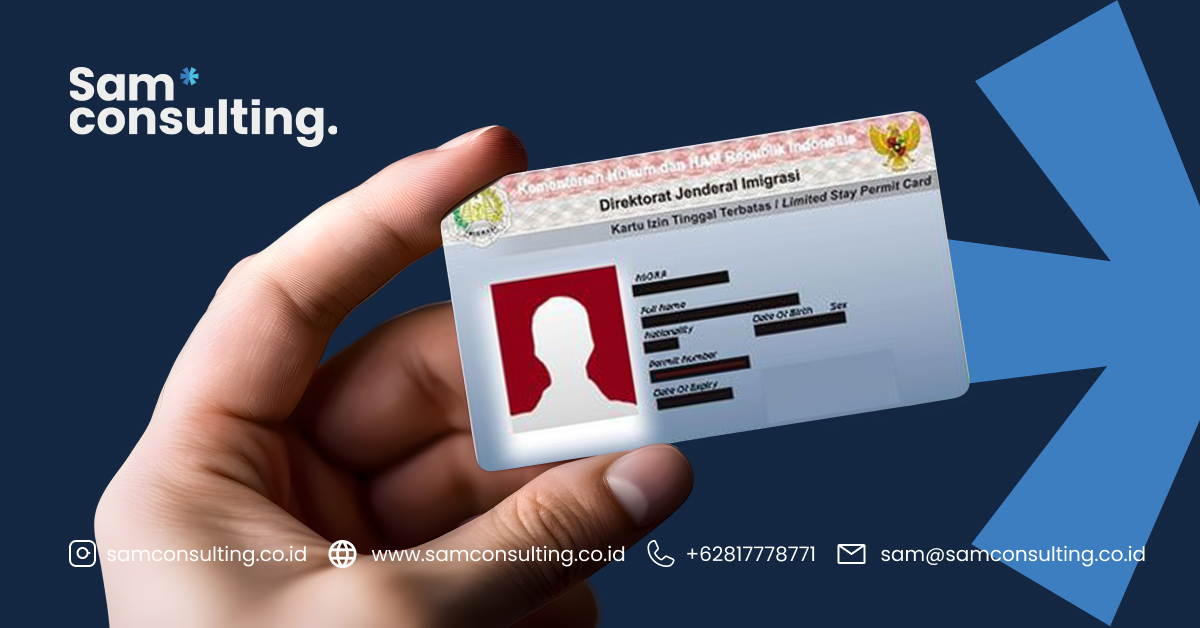
What Is KITAS / ITAS? ITAS (Izin Tinggal Terbatas) is a Limited Stay Permit for foreigners or expatriates to stay or work in Indonesia for a period of time. In addition, the Indonesian government issued a physical card for an ITAS known as KITAS (Kartu Izin Tinggal Terbatas) Limited Star Permit Card, but now KITAS is issued digitally.  This Limited Stay Permit (ITAS) is valid for 6 (six) months, 1 (one) year up to 2 (two) years. This permit can be extended by an applicant according to laws and regulations. Then, after 2 (two) years, it is still possible for foreigners to extend it.    Laws and Regulations Meanwhile, the Indonesian Government regulates regarding KITAS (limited stay permit) as follows: Law number 13 of 2013 concerning Manpower. Government Regulation (PP) number 31 of 2013 concerning Implementing Regulation of Act number 6 of 2011 concerning Immigration. Regulation of Ministry of Law and Human Rights (Permenkumham) number 27 of 2014. Government Regulation number 26 of 2016 concerning Amendment to Government Regulation number 31 of 2013 concerning Implementing Regulation of Act number 6 of 2011 concerning Immigration. (PP 26 / 2016). Regulation of Ministry of Law and Human Rights number 16 of 2018 concerning the procedure of issuing visa and stay permits of foreign workers. Presidential Regulation number 20 of 2018 concerning the use of foreign workers.  A Sort of KITAS The government issues three kinds of KITAS (limited stay permit), namely: KITAS Working Visa KITAS or ITAS is commonly used for foreigners who want to work in Indonesia. However, foreigners also need a work permit known as the Approval of Foreign Worker Utilization Plan (Pengesahan RPTKA) mentioning the job titles,  specific tasks, and the length of employment of a foreign worker.  Furthermore, to apply for a working visa KITAS, you must obtain sponsorship from your employer which is a registered company within Indonesia. These companies include: An Indonesian-owned company (PT PMDN). A foreign-owned company (PT PMA). A representative office. A working KITAS/ITAS holder also can re-enter Indonesia multiple times with one permit that is referred to as a MERP (Multiple Exit and Re-entry Permit).   KITAS Spouse Visa  The main requirement to obtain a Spouse Visa KITAS /ITAS is getting married to an Indonesian citizen. You also need an official marriage certificate approved by the Indonesian government. Authorized offices that can perform marriages are religious affairs offices (Kantor Urusan Agama / KUA) and civil registry offices (kantor catatan sipil). Furthermore, getting married directly in Indonesia is the best choice for a spouse visa KITAS. Based on marriage law in Indonesia, the marriage to an Indonesian spouse is valid only when it is performed in accordance with the regulations and religious beliefs of both husband and wife in Indonesia. This KITAS spouse visa only allows foreigners to stay, not being employed in Indonesia, only as a freelancer.   Do you need our help? Please contact us by WhatsApp   KITAS Retirement Visa KITAS Retirement Visa is for foreigners with the age of 55 years or older and would like to spend their retirement in Indonesia. To obtain this KITAS retirement visa, you can enter Indonesia first, then after a month, you can apply for a KITAS retirement visa.  In addition, the KITAS retirement visa is a type of long-term visa that you can obtain through an online application and should meet some requirements.  With a retirement KITAS/ITAS, you can live in Indonesia, enter and exit the country as many as possible. Also you are allowed to obtain a local bank account and hire a driver or domestic helper. However, please note that you are not allowed to work at all in Indonesia.    Who Is Eligible to Apply for KITAS (limited stay permit)? The following are the ones who are eligible to apply for KITAS (limited stay permit): Foreigners entering Indonesia with a limited stay visa. Children that were born in Indonesia with their father and/or mother of a KITAS holder at the time of birth. Foreigners that are converted from a visit stay permit. Foreigners who get married legally to an Indonesian citizen. Children of foreigners that are legally married to Indonesian citizens. Captain, crew, or foreign experts on board ships or institutions which operate in Indonesian waters and jurisdictions.    Required Documents to Apply for KITAS Here are some required documents to obtain KITAS, namely: Your valid passport and a colored copy of your passport. Proof of financial solvency Two passport-size colored pictures Any other documents that may be requested by the Immigration Department depending on the KITAS you apply for. Procedure to Obtain KITAS For foreigners who would like to apply for KITAS, Sam Consulting offers a KITAS service that makes it easy for you to obtain KITAS.  That’s all the review of limited stay permit or KITAS/ITAS. If you need more information regarding the visa or permit, please contact SAM Consulting with a professional team ready to help any time. Furthermore, SAM Consulting has a 10 years proven track record of handling international clients.   Do you need our help? Please contact us by WhatsApp  

Visa on Arrival Indonesia 2026

Visa on Arrival Indonesia 2026 (complete Guide)

Indonesia continues to simplify entry procedures for international travelers through the Visa on Arrival Indonesia (VoA) system. This visa allows eligible foreign nationals to enter the country quickly for tourism, short visits, and limited business activities without applying for a visa long before travel. This Visa is widely used by visitors arriving in destinations such as Bali, Jakarta, and other major entry points. Travelers can obtain the visa either directly at the airport upon arrival or online through the electronic (e-VoA) system before departure. This guide explains the latest rules, requirements, and extension procedures for VoA in 2026. What Is the Visa on Arrival Indonesia? The Visa on Arrival Indonesia (VoA) is a short-term visit visa issued to eligible foreign nationals when they enter the country. This visa allows visitors to stay in Indonesia for a limited period for activities such as tourism, visiting friends or family, or attending certain non-employment business meetings. Under the Indonesian immigration classification system, the Visa on Arrival corresponds to Visit Visa Index B1. Visitors can obtain this visa: directly at designated Indonesian airports or seaports, or online through the electronic (e-VoA) system before traveling. Because of its simplicity, the Visa on Arrival has become the most commonly used entry visa for short visits to Indonesia. How Long Can You Stay with this Visa? It allows visitors to stay in Indonesia for: 30 days initial stay This stay period can be extended once for another 30 days, giving a maximum stay of 60 days. It is important to apply for the extension before the initial 30-day period expires. Overstaying a visa may result in administrative penalties. Currently, Indonesian immigration regulations impose an overstay fine of approximately IDR 1,000,000 per day. Visa Validity It must be used within 90 days from the date of issuance. It is important to note that visa validity is different from the permitted stay period. The stay period begins from the date of entry into Indonesia, not from the date the visa was issued. Visa on Arrival Extension Visitors who wish to stay longer than 30 days may apply for an extension. The extension allows: one additional 30-day stay  Extensions are typically processed through the Indonesian immigration system. Travelers should apply for the extension before the initial stay period expires. Activities Allowed with Visa on Arrival Visitors entering Indonesia with a VoA may conduct several permitted activities. These include: Tourism and Leisure Travelers may visit Indonesia for vacations, sightseeing, and personal travel. Visiting Friends or Family Foreign nationals may visit relatives or acquaintances residing in Indonesia. Business Discussions The visa allows participation in certain non-employment business activities, such as: business meetings contract discussions negotiations signing agreements Visitors may also conduct site visits to offices, factories, production facilities, or mines. Medical Treatment Foreign nationals may travel to Indonesia for medical consultations or treatment at hospitals or healthcare facilities. However, the Visa on Arrival does not allow employment or paid work. Activities Not Allowed Under VoA Although some business activities are permitted, VoA remains a visit visa, which means certain activities are prohibited. Visa holders may not: work for Indonesian companies receive salary or wages in Indonesia sell goods or services conduct profit-generating activities manage business operations or supervise production continuously Foreign nationals who intend to work or manage business operations in Indonesia must instead apply for a Work KITAS or Investor KITAS. VoA Requirements Travelers must present the following documents when entering Indonesia under this Visa Passport The passport must be valid for at least six months from the date of entry. Return or Onward Ticket Visitors must provide proof of an outbound ticket leaving Indonesia. Immigration officers may also ask additional questions regarding the purpose of travel and intended length of stay. Electronic Visa on Arrival (e-VoA) Indonesia now offers the (e-VoA), which allows travelers to obtain it online before traveling. The e-VoA system helps visitors avoid long queues at immigration counters and speeds up entry procedures at airports. After approval, the visa is digitally linked to the traveler’s passport and verified by immigration officers upon arrival. Travelers using e-VoA must still ensure that their passport and travel documents meet the required conditions. Where Can You Get Visa on Arrival? Visa on Arrival is available at many international entry points in Indonesia, including major airports and seaports. Common entry locations include: Ngurah Rai International Airport (Bali) Soekarno-Hatta International Airport (Jakarta) Juanda International Airport (Surabaya) several international seaports and other airports Not all entry points provide Visa on Arrival services, so travelers should confirm eligibility before traveling. When Should You Use Visa on Arrival? Visa on Arrival is suitable for travelers who: plan short vacations in Indonesia want a simple entry procedure intend to stay no longer than 60 days attend short business meetings or negotiations However, travelers who plan longer stays, employment, or business operations should apply for other visa types. Who Is Eligible for VoA Indonesia? This Visa is available to citizens of selected countries approved by Indonesian Immigration. Eligibility may change based on government policy updates. Travelers are advised to verify their eligibility before applying or consult a professional visa advisor to avoid entry issues. If you are unsure whether your nationality is eligible, Sam Consulting can verify your eligibility and assist with your application before your travel. Conclusion The Visa on Arrival Indonesia provides a convenient entry option for international travelers visiting the country for tourism, short visits, or limited business activities. With a simple application process and the option to extend the stay once, this visa remains one of the most practical entry permits for short-term visitors. However, travelers should always ensure that their visa type matches the purpose of their visit. Engaging in prohibited activities or overstaying may lead to fines or immigration penalties. Sam Consulting assists international visitors with visa guidance, immigration procedures, and residence permit planning in Indonesia. If you need professional advice regarding Indonesian visas or long-term stay permits, our experienced team is ready to assist.   Do you need our help? Please

Business Visa in Indonesia

Business Visa Indonesia 2026: Types and Requirements

The Indonesia Business Visa allows foreign nationals to enter Indonesia for meetings, negotiations, and other temporary commercial activities. Under the latest Indonesian immigration regulations, business visitors may travel to Indonesia using several visa categories such as the B1 short visit visa, C2 business visa, or D2 multiple entry business visa, depending on the length and frequency of their visits. Under the latest Indonesian immigration regulations, business visits typically fall under several visa categories, including B1 short visit visas, C2 business visit visas, and D2 multiple entry business visas. Each visa allows certain business activities but does not permit employment or income-generating work in Indonesia. This guide explains the types of business visas available in Indonesia, permitted activities, requirements, and key immigration rules for international visitors. What Is an Indonesia Business Visa? An Indonesia Business Visa allows foreign nationals to enter Indonesia for temporary commercial activities that do not involve employment. In other words, it allows you to explore business opportunities — but not to work. These visas are commonly used for: Business meetings and negotiations Contract discussions and signing agreements Market research and feasibility studies Site visits to offices, factories, and production facilities Participation in conferences, meetings, and exhibitions However, a business visa does not grant the right to work in Indonesia. Visitors entering Indonesia for business purposes are not allowed to: Sell goods or services directly Receive salary or wages from Indonesian companies Work for Indonesian employers Continuously supervise operational business activities Foreign nationals who intend to work or manage operations must apply for a Work KITAS or Investor KITAS instead. Types of Indonesia Business Visas Indonesia currently provides several business visa options depending on visit duration and travel frequency. B1 Visa (Short Visit – 30 Days) The B1 visa is typically used for short-term visits that combine tourism with limited business activities. Stay Duration Up to 30 days Extendable once for another 30 days Permitted Activities Under the B1 visa, visitors may: Attend business discussions or negotiations Sign agreements or contracts Conduct site visits to offices or factories Visit friends or family Travel for tourism Receive medical treatment in Indonesia Entry Requirements Travelers must present the following documents during immigration inspection: Passport valid for at least 6 months Outbound or return ticket from Indonesia Visa Validity The visa must be used within 90 days from the date of issuance.   C2 Business Visit Visa (60 Days) The C2 visa is designed for foreign professionals who require a longer business stay and want to obtain visa approval before arriving in Indonesia. Stay Duration Up to 60 days Extendable depending on immigration approval Permitted Activities C2 visa holders may: Conduct business meetings or negotiations Sign commercial contracts Inspect goods or production sites Visit suppliers or manufacturing facilities Travel for tourism Visit friends or family Restrictions Visitors under this visa are not permitted to perform operational work or earn income in Indonesia. They are prohibited from: Selling goods or services Receiving salary or compensation Supervising production activities continuously Required Documents Applicants typically must provide: Passport valid for at least 6 months Bank statement for the previous three months Recent passport photograph Invitation letter from an Indonesian company or institution   D2 Multiple Entry Business Visa Frequent business travelers may apply for the D2 Multiple Entry Business Visa, which allows repeated visits to Indonesia without applying for a new visa each time. Applicants can apply for Investor KITAS for more liabilities. Stay Duration Up to 60 days per entry Available Validity Options 1 Year 2 Years 5 Years Permitted Activities D2 visa holders may: Attend meetings and negotiations Sign commercial agreements Visit suppliers or production facilities Participate in conferences and exhibitions Travel for tourism or personal visits Restrictions Like other business visit visas, D2 visa holders cannot work or receive income in Indonesia. Prohibited activities include: Selling goods or services Working for Indonesian companies Receiving salary or compensation Managing operational business activities Required Documents Applicants must generally provide: Passport valid for at least 6 months Proof of financial capability of minimum USD 2,000 Recent passport photograph Additional supporting documents may include: Business invitation letter Curriculum Vitae Travel itinerary Important Immigration Compliance Rules All business visa holders must follow Indonesian immigration regulations. Visitors must respect local customs, comply with visa conditions, and maintain sufficient financial resources during their stay. It is important to note that overstaying  or engaging in prohibited activities may lead to: Administrative fines Deportation Entry bans Additional legal sanctions Currently, overstaying in Indonesia may result in a fine of approximately IDR 1,000,000 per day. Choosing the Right Business Visa Selecting the correct visa depends on the purpose and frequency of travel. Generally: B1 Visa is suitable for short business visits or exploratory trips. C2 Visa is ideal for longer business stays. D2 Multiple Entry Visa is recommended for executives and investors who travel frequently to Indonesia. Using the correct visa type helps ensure smooth entry into Indonesia and full compliance with immigration regulations. Conclusion Indonesia offers flexible business visa options for international professionals who need to visit the country for meetings, negotiations, or commercial exploration. However, business visit visas are strictly limited to non-employment activities. Foreign nationals who intend to work or manage business operations in Indonesia must apply for the appropriate long-term stay permit. Sam Consulting provides professional assistance with business visa applications, immigration compliance, and investor residency planning in Indonesia. If you need help determining the correct visa for your situation, our experienced team is ready to assist. Frequently Asked Questions Can I work in Indonesia with a business visa? No. Business visas only allow meetings, negotiations, and site visits. Employment requires a Work KITAS. Can I extend a business visa in Indonesia? Yes. Some business visas, such as the B1 and C2 visas, may be extended depending on immigration approval. What is the difference between a business visa and an Investor KITAS? A business visa allows temporary visits for meetings or negotiations, while an Investor KITAS allows long-term residence for foreign shareholders or directors of Indonesian

How to register trademark in Indonesia

Trademark in Indonesia: Definition, How to Register and Benefits

Registering a trademark in Indonesia brings many advantages for your business. You also gain exclusive rights to your business logos, branding, and symbols. Know more details about the trademark below! Definition of a Trademark A trademark is defined as a brand that is used on goods traded by some people collectively agreed or legal entity to distinguish other similar goods. In addition, the examples of trademarks in Indonesia for products are Apple, Samsung, SONY, NOKIA, Sosro, LG, and so on.  A trademark differentiates one from others through symbols, colors, designs, words, and graphics that identify a business. Protecting trademarks is an asset in leading to greater customer satisfaction and higher sales.  In addition, by registering a trademark in Indonesia, the owner’s rights are protected and can file legal action against unauthorized use of the trademark.   Regulation of a Trademark in Indonesia Indonesian government issues some rules to regulate the trademark in Indonesia, as follows: Law Number 20 of 2016 (Trademark and Geographical Indication Law). Ministerial Regulations of Law and Human Rights Number 67 of 2016 regarding Trademark Registration.     Benefits of Registering a Trademark in Indonesia By registering your trademark, you will gain some advantages for companies, namely: The exclusive law protection for owners of intellectual property rights.  A registered trademark definitely is protected from unauthorized use of the trademark. Then, the owner of rights can file legal action against claims of infringement by other parties. First to file. In accordance with Indonesian Trademark Law No. 20 of 2016, the government applies the “first to file’ method which means the first legal person, firm or legal entity that files for a particular trademark in Indonesia gains the priority for its use.    Need our help? Contact us by WhatsApp Avoid loss due to unauthorized use of a trademark. Due to an unregistered trademark, anybody can use the trademark. This definitely gives disadvantages, even the loss for your business as anybody can easily duplicate the trademark so that customers can’t distinguish it from other similar brands.  Increase profit The registered trademark boasts added value in the eyes of their customers due to the product having differentiation from other similar brands. In addition, the company can use this trademark to approach their brand closer to their prospects. Enhance competitiveness in business A trademark that is already registered cannot be duplicated by anybody or a legal entity without authorized use of the trademark.   Requirements of Registering a Trademark in Indonesia To register a trademark, there are some requirements to follow for the person and legal entity.  A trademark for a legal entity requires the documents as follows: A deed of company establishment. Scan / photocopy personal identity and Tax Payer Number (Nomor Pokok Wajib Pajak) of president director. The description of business name, business field, and name of a trademark that will be registered. Logo of trademark (if any) with the size of trademark label min. 2×2 cm and max 9×9 cm in the form of JPG. Other related documents. A trademark for the person requires the documents as follows: Scan/photocopy Indonesian ID (KTP) of the applicant (Indonesian citizen). Scan / photocopy KITAS / KITAP of applicant (foreigner or expatriate). The description of business name, business field, and name of a trademark that will be registered. Logo of trademark (if any) with the size of trademark label min. 2×2 cm and max 9×9 cm in the form of JPG. Other related documents.   Need our help? Contact us by WhatsApp   How to Register a Trademark in Indonesia The following is a procedure to register a trademark in Indonesia: Brand Checking This first step is to check whether the trademark is already registered or not. Filling in the Application Form If the trademark is not registered yet, next register through https://merek.dgip.go.id/. Then, fill in the form that contains: You should translate the meaning of the trademark into Bahasa if the trademark in English. Formality Examination If the application is accepted, the Directorate General of Intellectual Property Rights (DGIP) conducts a formality examination. Then, if the application meets the requirements, the announcement of the application in the official Trademark gazette will be published for 2 months. This is to see whether there will be any opposition from parties. If there is any opposition, the applicant can issue a counter statement to reject the opposition. On the other hand, if there is no opposition, the applicant can continue the process to the next steps.  Substantive Examination Next, conduct a substantive examination for 30 days. If the examiner in the substantive examination decides that the application can be registered, DGIP will register the trademark and let the applicant or representative know about the trademark registration.  Trademark certificates will be issued and given to the applicant or representative after being registered. Last, DGIP will also announce trademark registration in the official Trademark gazette.   In conclusion, trademark registration is important to protect your business in the future. If you need help registering a trademark, SAM Consulting with a professional team is ready to help any time. Furthermore, SAM Consulting has a 10 years proven track record of handling international clients.   Need our help? Contact us by WhatsApp  

Joint venture Indonesia

Joint Venture Indonesia: How to Set Up?

  A joint venture Indonesia (JV) combines two or more businesses’ expertise and resources to reach particular goals or pursue specific projects. The joint venture is not only combining different resources but also shares its rewards and risks. Since it is a big decision, many considerations involve before entering into a joint venture Indonesia.   Things Need to Consider before Setting up a Joint Venture It is easier to start a new joint venture company in Indonesia than buying shares in an existing one. Other Things you need to consider while setting up a joint venture in Indonesia are as follow:   1. Determine the Business Sector First of all, it is vital to determine the business sector of Indonesian joint ventures. It is because not all sectors are open to foreign ownership.   2. Negative Investment List and Foreign Ownership Under the Negative Investment List (DNI), regulate the maximum percentage of foreign ownership. This list keeps updated from time to time.   3. Determine the Locations After determined the joint venture company’s business sector and foreign ownership, it is also necessary to decide where the JV will operate. This is because certain business sectors do not allow a joint venture to operate in certain Indonesian regions. Therefore, certain business sectors only allow a joint venture to operate in specific regions in Indonesia.   4. Taxation The major taxation matters for a joint venture company are the withholding and income tax payable. In most cases, foreign shareholders are responsible for 20% of the final withholding tax on dividends from an Indonesian joint venture company. Once JV is established, it is always advisable to outsource taxation matters to an expert to ensure compliance and seamless operations in Indonesia.   Types of Joint Venture in Indonesia Before setting up a JV, you need to know about the types of JV in Indonesia. There are two types of joint ventures in Indonesia: corporate JVs and contractual JVs.   Corporate JVs There are two kinds of Corporate JVs which are incorporated JVs and partnerships. An incorporated JV is a legal entity that has limited liability status, commonly referred to as a limited liability company (Perrseroan Terbatas or “PT”). PTs are organized under the Company Law. A partnership is a business entity that does not have limited liability status. Common forms of partnerships in Indonesia include: A firm (firma or venootschap onder firma); A komanditer partnership/association (commanditaire vennotschap or “CV”). The main difference between a firm and a CV lies in the contribution of the partners. In a CV, there are two types of partners, namely active partners, who manage the business of the CV, and passive partners, who merely make capital contributions to the CV. Above all, the liability of a CV’s passive partners is limited to the amount of their capital contribution. In contrast, there are no distinct categories of partners in a firm.   Contractual JVs A contractual JV does not require the establishment of a legal entity since it’s formed by agreement between the JV partners. The typical JV founding documents for a corporate JV are the: Deed of establishment, which contains the entity’s articles of association and a list of the members of the board of directors and board of commissioners, for a limited liability company (PT), or a list of the partners, for a partnership. JV/shareholders’ agreement entered into by the JV partners, which is a private agreement documenting the relationship between the JV partners. The deed of the establishment must be in the form of a notarial deed. A decree from the Ministry of Law and Human Rights (MOLHR) approving the establishment of the PT (MOLHR decree). Want to know more about Joint Venture in Indonesia? Please contact us