Digital Era Economy

Digital Era Economy Indonesia: How to Start Business

  As the largest and fastest-growing digital economy in Southeast Asia, Indonesia is estimated the gross merchandise value of its digital economy that will grow US$100 billion by 2025. The growth expected is beyond the entire Southeast Asia region that has US$240 billion digital era economy growth in total. Also, There are 75 fintech payment startups and more than 150 fintech lending startups, with 2000 technology startups in total in Indonesia. Despite the COVID-19 pandemic, Indonesia’s digital era economy growth remains strong and has increased. It is increasing 11% to US$44 billion compared to US$40 billion in 2019.   Indonesia’s Rapid Economy Growth: How it can be? Indonesia’s population is the largest in Southeast Asia. Approximately 273.5 million as of 2020 is the reason for the rapid and exciting growth. The increase of mobile phone and internet penetration rate is along with Indonesia’s per capita income growth. Leveraging on this digital economy growth in Indonesia as the way to innovate to deal with the inefficiencies in Indonesia. Inefficiency elimination allows individuals to communicate, purchase, and sell things and perform financial transactions with the application of digital technology, further driving the already rapidly-growing digital sector.   Starting a Business in Indonesia: the Rising Digital Economy of Indonesia Two businesses are flourishing in this digital economy of Indonesia, Fintech, and health-tech. Compared to other sectors in the country, the fintech sector has a relatively high adoption rate. Indonesia has a great alternative to traditional banking in terms of flexibility and convenience through this sector.   Boost The Digital Economy Growth: How initiative? Regulations are not fully matured in this dynamic digital economy in Indonesia yet. Still, the Indonesian government is striving to develop several initiatives to promote the digital economy growth. In addition, these initiatives include creating clear and simplified licensing requirements for digital startups, setting policies for customer protection, establishing a fintech sandbox, and building a code of conduct through the Asosiasi Fintech Indonesia and Asosiasi Fintech Pendanaan Indonesia. The Indonesian government issued GR 71/2019, concerning customer protection and data privacy and customer protection on the implementation of electronic systems and transactions to replace GR 82/2012 on the implementation of electronic systems, electronic transactions, electronic agents, electronic certification, domain name management, and reliability certification institutions. Want to know more about starting a business in Indonesia? Please contact us. Lastly, you can read about how to set up a foreign company in Indonesia.

Halal Certificate in Indonesia

Halal Industry in Indonesia: A Prospective Industry

  Halal Industry Indonesia: What is Halal and Halal Certificate? Halal means there are no Haram ingredients in consumer goods such as food, drugs, and cosmetics. What is Haram, then? Haram is everything that contains pork, lard, animal blood, dead and poisonous animals, and non-haram animals slaughtered without Islamic-Law compliance. Furthermore, to convince customers that a product doesn’t contain any Haram ingredients also permissible to consume, we need a Halal Certificate to prove. As an instrument of the halal industry in Indonesia, Halal Certification declares that the products follow Islamic Law. Indonesian Halal Certificate Issuing Authority The National Body of Halal Assurance (BPJPH) is the highest authority to certify and issue a halal certificate in Indonesia. BPJPH works in coordination with the Indonesian Ulama Council (MUI). As one of the highest authorities on Indonesian Islamic affairs, MUI is in charge of setting up the halal compliance standard and issuing the Halal fatwa. The two major authorities (The Food, Drug, and Cosmetics Assessment Agency (LPPOM) and MUI Fatwa Committee) are responsible for halal assessment, audit, and declaration.   Important Notes on Halal Standard in Indonesia Meanwhile, the halal standard based on MUI’s Fatwa Indonesia is Sharia Law. There are some specific details that companies need to pay attention to: • Firstly, Under Sharia Law, a company cannot associate their brand/product name or insinuate with anything haram. • Also, MUI prohibit packaging, design, and nature of a product (i.e., sensory characteristics) that imitate anything haram.   Types of Halal Certificates in Indonesia Categories that can apply for the Halal Certificate are: Food and Beverages, Drugs, Cosmetics, Slaughterhouses, and Restaurants/ Catering/ Kitchens Furthermore, both manufacturers and importers/distributors can apply for the Halal certificate. That’s not true if one of the requirements to obtain a Halal Certificate must be your company’s management needs to be Muslims. As long as your company complies with the requirements, the religion of its management team is irrelevant. Want to know more about Halal Certification? Please contact us! Read about the under-name import service Indonesia!

Stay permit in Indonesia

Stay Permit Sponsorship Indonesia: Who are eligible?

  Law Number 6 of 2011 concerning Immigration regulates the definition of sponsor or guarantor. A guarantor is a person or corporation responsible for the presence and activities of foreigners while in the territory of Indonesia. Obtain a stay permit sponsorship in Indonesia is a vital thing to have. A foreigner can’t choose randomly for a person to be a stay permit sponsorship in Indonesia since the Government has some specific criteria.   How to choose a stay permit sponsorship in Indonesia? Based on the laws and regulations in Indonesia, three legal subjects can become sponsors for foreigners who want to stay in Indonesia. The guarantor and sponsor have a crucial position in the visa process. Spouse of foreign citizens who will come to Indonesia, in the case of mixed marriages. Foreign nationals who are married to Indonesian citizens can obtain guarantees from their spouses who are Indonesian citizens. Spouses of Indonesian citizens can be the person in charge of regular visas. Every Indonesian citizen can also become a guarantor or sponsor of a visa for foreign citizens. Visas that can be sponsored by ordinary Indonesian citizens are Visa on Arrival and Repatriation Visa. Repatriates are foreign ex-Indonesian citizens who wish to live in the Indonesian Territory. Indonesian companies can also become sponsors or guarantors for Foreign Workers (Foreign Citizens who come to Indonesia to work). However, not all Indonesian companies can become sponsors or guarantors for their employees. Only Indonesian companies that have a minimum paid-up capital of IDR 1 billion can become guarantors.   Responsibilities as a Stay Permit Sponsorship Meanwhile, the guarantor or sponsor has various responsibilities after the guarantee for the foreign worker has obtained a visa. These responsibilities are: firstly, be responsible for the existence and behavior of foreign nationals or foreign workers during their existence in Indonesia; next, report any changes in civil status, immigration status, and changes in the address of the foreigner who is their responsibility; lastly, pay costs arising from the return or return of foreign nationals or foreign workers who are under guarantee by him if The residence permit for the foreign citizen or foreign worker in question has expired; the subject of immigration action in the form of deportation. Read The new regulation about stay permit in Indonesia during covid-19. Do you need a sponsor to apply for a stay permit in Indonesia? Please contact us! Need further information about KITAP in Indonesia? Click here

Undername Import service indonesia

Under Name Import Service Indonesia

  Have a plan to import goods and products to Indonesia? If yes, some things need to prepare for the permit because Indonesia’s bureaucratic procedures are quite complex for trading compliance. Securing an Import License through OSS is not enough. Setting up a company in Indonesia is a must, which can take more than five months, even longer. Using under name import service in Indonesia will be more effective in cutting timeline, energy, and expenses.  This article will help give information regarding alternative methods to import goods using the under-name service in Indonesia.   What Is an Under Name Import Service? Username importer, known as the importer of record (IOR), is a legal entity registered in Indonesia responsible for all the documents and entry requirements for importing goods to the country. The under name import provider has official licenses and permits to carry out import activities registered under the Directorate General of Customs and Excise  an IOR will provide all entry documents needed for clearance through customs, payments for any levies, duties or fines, product certification, and classification, and other responsibilities, fall to the importer in Indonesia.   Benefits You Gain  Using this service can bring benefits for both companies and manufacturers related to import in Indonesia. The very first thing is there will be no issues with taxes and legal points since IOR is included as one of IOR’s responsibilities, so they will make sure everything is related to it. Next, importers or manufacturers who do not have the required documents and import approval from the authorities don’t need to bear custom risks of shipment delays and penalties. Lastly, benefits provided not limited to: The shipment clearance process becomes simpler. A transparent process that is fully in compliance with all export and import regulations It no necessary to establish an import legal entity in Indonesia just for importing purposes Lastly, Have a plan to set up a company in Indonesia? Please check this article first. Want to know more about the under-name import service in Indonesia? Please contact us.  

Import License in Indonesia

Import License in Indonesia : Types and Requirements

  Import is one of the trade activities legally transporting goods or commodities from one country to our country. The number of imported goods generally requires interference from customs in sending and receiving countries. Import license in Indonesia needed to import goods to the Indonesian market. It’s only for the particular industry and has restrictions on importing goods that are not related to some sectors of businesses. Therefore, you have to know in advance what business import license suits your business field and how you apply for it. To get through the customs clearance, you need to hold an import license no matter how small or how big your shipments are. This article will let you know everything you need to know about and apply for an import business license in Indonesia. What is Import License in Indonesia? Basically, import license in Indonesia is a non-tariff barrier that is used to control the import allowance and items to Indonesia. It is also protecting local producers by restricting the fields of goods imported.    Type of Import License in Indonesia There are 3 types of Import License in Indonesia:   1. API-U (General Import License)  This license is for fully-made products to be sold or distributed later in Indonesia. It is for the import of finished products or to trade goods with a third party.  2. API-P (Producer Import License)  Imported fowl raw materials or manufacture support goods for the manufacturing process in Indonesia need this license, but it’s restricted to re-selling/re-distribute the goods. In other words, the goods imported are only can use for the production/manufacturing process. 3. A Limited Import License (API-T) API-T is limited importer identification with the Indonesian Investment Coordinating Board (BKPM) as the issuer. The goods imported are subject to a reduced withholding tax of 2.5 % compared to the normal rate of 7.5 % under this license. However, since the entry into force of the OSS system, all licensing and licensing processes will be under OSS, including processing API and NIK permits as import permits. Through this OSS system, each company will get a NIB (Business Identification Number) which also applies as an Importer Identification Number (for import permits) and Customs Identification Number (if the company is processing import permits). The validity period of the NIB is as long as the company continues to operate. So nowadays, entrepreneurs engaged in import and export no longer need to take care of API and NIK. However, entrepreneurs still have to ensure whether they still need to meet the technical requirements in the field of the relevant authorities in carrying out import and export activities in the field. Thus, import companies or companies engaged in export activities do not need to go through obtaining API and NIK anymore. However, importers must ensure that they still meet the technical import requirements with the relevant authorities.   Important notes A regulation issued by the Ministry of Trade regulated about the same company does not allow for API-U and API-P license. Therefore, you need to set up 2 Companies to simultaneously able to conduct your business activities.   Documents Required to Apply for Import License in Indonesia Photocopy of Deed of Establishment from Notary Public and its amendments (if any). A copy of Ministry of Law and Human Rights Decree and amendments thereof (if any). Photocopy of Company Domicile Certificate (SKDP). A copy of NPWP and SKT Agency. Information related to the classification of business fields changed/included in the NIB. Photocopy of ID card of the shareholders. Photocopy of NPWP of the shareholders.   Want to know more about Import License in Indonesia? Please contact us We suggest you read about related Types of companies in Indonesia.  

Retirement Visa Indonesia

Indonesia Retirement Visa (KITAS): Complete Guide for Foreign Retirees in 2026

Looking to enjoy your retirement in a tropical paradise? Indonesia has become one of the top destinations for retirees worldwide thanks to its affordable lifestyle, beautiful landscapes, and welcoming expat communities. The Indonesia Retirement Visa (KITAS) offers a legal pathway for foreign nationals to live long-term in Indonesia without working, making it an ideal choice for those seeking a peaceful and comfortable retirement.   What is the Indonesia Retirement Visa? The Indonesia Retirement Visa is a long-term residence permit (KITAS) designed for foreign nationals who wish to live in Indonesia during retirement. This visa allows you to stay legally in Indonesia for an extended period without the need for frequent visa renewals or exits. Important: This visa does not allow employment or business activities in Indonesia.   Types of Retirement Visas 1. One-Year Retirement Visa (E33F) Valid for 1 year Renewable annually up to 5 years Requires a local sponsor Best for flexible long-term stay 2. Five-Year Retirement Visa (E33E – Silver Hair Visa) Valid for 5 years No sponsor required Requires higher financial commitment Best for long-term residency without renewals Who Can Apply? To qualify for a retirement visa, applicants must: Be at least 55 years old   Have stable income or pension Not intend to work in Indonesia Be financially independent Financial Requirements Applicants must typically show: Minimum income: around $3,000 per month  Or annual income: approx. $36,000 Bank statements as proof of funds For long-term visas: Deposit requirement may reach $50,000 (for 5-year visa)  Requirements & Documents To apply, you will need: Passport (valid 18+ months) Passport-sized photos Proof of pension or income Health and life insurance Accommodation (lease agreement) Sponsor letter (if required) Personal CV Visa Validity & Duration Validity: 1 year (standard visa) Extension: Renewable annually up to 5 years  Entry Type: Multiple entry (with re-entry permit) Benefits of the Retirement Visa – Long-Term Stay Live legally in Indonesia without frequent visa runs. – Lifestyle Benefits Lease property Open a bank account Access healthcare services – Travel Flexibility Enter and exit Indonesia freely during visa validity. – Peaceful Retirement Enjoy a relaxed lifestyle with lower living costs. What You Can and Cannot Do Allowed: Live in Indonesia long-term Travel in and out of the country Manage personal finances Not Allowed: Work or earn income locally Start a business Be employed in Indonesia How to Apply Step 1: Check Eligibility Confirm age, income, and requirements. Step 2: Prepare Documents Gather all required paperwork. Step 3: Apply Through Sponsor/Agent Applications are usually handled by licensed visa agencies. Step 4: Receive Visa Approval Processing typically takes 7–14 working days. Step 5: Convert to KITAS After arrival, your visa is converted into a residence permit. Cost of Retirement Visa Government fees vary Total cost (with services): approx. $800–$1500 depending on provider  Note: Prices may change based on regulations and service providers. Can You Apply for Permanent Residency? Yes — after holding a Retirement KITAS for several years, you may become eligible for permanent residency (KITAP).  Frequently Asked Questions  How much income do I need? You typically need at least $3,000 per month or equivalent pension income. Do I need savings or just income? Both may be required depending on the visa type. What is the minimum age? You must be at least 55 years old. Can I be rejected? Yes, if documents or financial proof are insufficient. Can I work in Indonesia? No, this visa strictly prohibits employment. Can I manage investments? Yes, as long as they do not generate local active income. Do I need a sponsor? Yes for the 1-year visa, no for the 5-year visa. Can I apply from inside Indonesia? In some cases yes, but offshore application is more common. Can I bring my spouse? Yes, dependent visas are available. Can I buy property? You can lease property long-term but not own freehold. What happens if I overstay? Fines and legal consequences may apply. Can I renew the visa? Yes, annually up to 5 years (for E33F). Why Retire in Indonesia? Indonesia offers: Affordable cost of living Warm climate and Nature Strong expat communities High quality of life Final Thoughts The Indonesia Retirement Visa is one of the best options for retirees looking for a balance between affordability, lifestyle, and long-term residency. With proper planning and the right support, you can enjoy a stress-free retirement in one of the world’s most beautiful destinations. Ready to Start Your Retirement Journey? Let professionals handle your visa process while you focus on enjoying your new life. Apply now and make your retirement dream a reality.

Staypermit in Indonesia

Stay Permit in Indonesia: Types and Differences

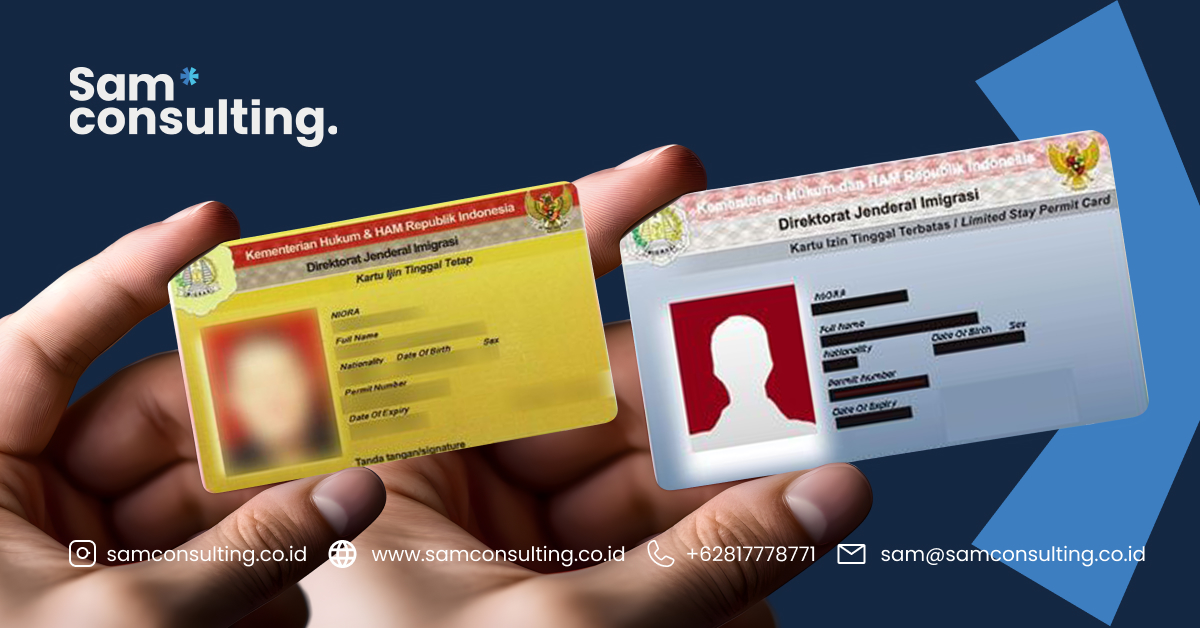
  Have any business related to Indonesia in the relatively long term? If yes, a stay permit is needed to obtain. Therefore, knowing the differences among the kind of stay permits in Indonesia is very important to match the need. There are three types of stay permit in Indonesia:   Visit Stay Permit in Indonesia (ITK) ITK is given for a short-term visit (30-60 days) for those, such as: Firstly, Foreigners who enter Indonesian territory with a visit visa, Meanwhile, a child born in Indonesia’s territory and at the time of birth, the father and or mother was the holder of a Visit Stay Permit also eligible to hold ITK. Then, foreigners from countries exempted from the obligation to have a visa by statutory provisions. After that, a foreigner assigned as a child is a means of transportation anchored or in the territory of Indonesia under the statutory provisions. Also. foreigners who enter Indonesian territory in a state of emergency, and Lastly, foreigners who enter the territory of Indonesia with a Visit Visa on Arrival. Know more about Business Visa Indonesia.   Limited Stay Permit in Indonesia (ITAS) ITAS is a permit for foreigners that enter the territory of Indonesia with a limited stay visa or foreigners that eligible for status transfer from an ITK, which covers: Foreigners in the context of investment; Work as an expert; Performing duties as clergy; Attending education and training; Carry out scientific research; Joining a husband or wife who holds a limited stay permit; a father and or mother for children of foreign Nationality who have a family law relationship with the father and or mother of an Indonesian citizen, even the father and or mother holding a limited stay permit or permanent residence permit for children who are under 18 (eighteen) years of age and have not yet married; Foreigners ex Indonesian citizens; and Foreign elderly tourists. Children who at the time of birth in the Indonesian territory the father and or mother hold a limited stay permit; Foreign captains, crew, or foreign experts onboard ships, floating devices, or installations operating in the territorial waters and jurisdiction of Indonesia under the provisions of laws and regulations; Foreigners that legally married to Indonesian citizens; or Children of foreigners that legally married Indonesian citizens. Foreigner to do short-term work. Furthermore, an ITAS Valid from 90 days up to 2 years.   Permanent Stay Permit (ITAP) Above all stay permits in Indonesia, ITAP is the most wanted permit in Indonesia due to the advantages. An ITAP is given to certain foreigners to live and settle in Indonesia’s territory as a resident of Indonesia. The permit eligible in the case of: Firstly, Foreigners who hold limited stay permits as clergy, workers, investors, and older people, also family due to mixed marriage; Then, Husband, wife, and or children of foreigners who hold permanent residence permits; Lastly, Foreigner, ex-Indonesian citizen, and ex-child subject to the dual citizenship of the Republic of Indonesia. In addition, it is mandatory to hold ITAS that already been extended for 5 (five) years after that can be transformed into ITAP. However, during this COVID-19 situation, special regulation of stay permit applied by the Government of Indonesia. Please check it here. Do you find any difficulties in applying for a stay permit? Please contact us  

How to choose company name in Indonesia

Company Name in Indonesia: How to Choose it?

  Preparing a company name in Indonesia is an important step to set up a company in Indonesia. If you prepare a company name, it should fulfill the requirement and legal aspects to be registered. This article will help to find out about it.   How to Choose Company Name in Indonesia? Before a company name is going to register, a Public Notary must approve it. Therefore, things that must follow in choosing a company name are:   Language If the company type is a local company in Indonesia, it must use fully Indonesian. However, if the company is a foreign investment company, you can use a partially or fully foreign language. It is a must to write the company name in the Latin alphabet.   A New Name Please ensure that the company name has never been used before by any company, either an inactive one. However, don’t worry!! You can check the company name here.   Similarity The company name should not be similar to any government or international institutions and organizations.   Contain at least Three Words Actually, it is an unwritten regulation. However, the system always rejects company name applications composed of 2 (two) words.   Avoid Using Obscene Words It is prohibited to use obscene or vulgar words to create conflict with the public order or morality.   Do Not Use Number or Special Character Avoid using numbers and characters. Using any letter or number combinations that do not form a coherent word is not allowed.   Not Contain Business Classification Make sure not to put any word with a business classification meaning, for example, PT Joint Venture Company. If the Legal Entity Information System approves the company name application, it will last for 60 (sixty) days. It will start to count before the end of which shareholders and Public Notary signed the company’s Deed of Establishment. Do you need our help to choose a company name? Please contact us!  

Type of Company in Indonesia

Types of Companies in Indonesia

  Want to expand a business in Indonesia? Before starting a business in Indonesia, you need to collect information about the types of companies in Indonesia. The type of company you choose may affect some areas such as business field, investment, taxation, permit, and so on.   Types of Companies in Indonesia There are three types of companies commonly used by business actors in Indonesia: 1. Local Company in Indonesia (PT PMDN) The main characteristic of a Local Company in Indonesia is 100% share owned by a local. However, it is still possible for a foreigner to have share ownership by using the under-name method. The authorized capital smallest amount is IDR 50 million with 25% paid-up capital. Owning a local company has more advantages compared to other types of companies. In addition, a local company can carry out a more comprehensive range of business fields and activities.   2. Foreign Investment Company in Indonesia (PT PMA) Different from a local company, a PT PMA in Indonesia’s ownership share can be 100% owned by a foreigner with minimum authorized capital is IDR 10 billion. A very vital thing that needs to do before establishing a PT PMA in Indonesia is to check the Negative Investment List (in Indonesia shorten as DNI). The DNI contains foreign investment limits related to company business classifications updated actively from time to time. Please stay updated.   3. Foreign Representative Office in Indonesia (KPPA) A KPPA in Indonesia is a foreign representative office to manage business activities. In addition, it is to evaluate the market conditions and investors. It is such an important step before starting to establish a company in Indonesia. A KPPA in Indonesia must have the same name as the parent company. Above all, there are limitations of the KPPA activities, such as:  1. Not allowed to sign any contract  2. Receive payment  3. Have another license beside it given   Do you want to establish a foreign company in Indonesia? Please read the comprehensive information here.  

How to set up an organization in Indonesia

How to Set Up an Organization in Indonesia

Are you willing to set up an organization in Indonesia? Before establishing it, you had better learn more about it. In our daily life, we know many kinds of organizations. The organizations are established with specialties ranging from religious cultural social to business activities. However, they are equal in law.    Types of Organizations in Indonesia In accordance with the legal form, there are two kinds of Indonesian organizations. They are:   1. Legal entity organizations Legal entity organizations are the most common type of organization established in Indonesia. They are registered in the Ministry of Law and Human Rights through AHU online system.   2. Non-legal entity organizations On the other hand, a non-legal entity organization is registered in the Ministry of Home Affairs. This is through the Civil Society Organization Information System (CSO Information System / SIORMAS) with an authorized Notary.    How to Establish an Organization in Indonesia To set up a legal association in Indonesia, getting permission from the Indonesian Minister of Law and Human Rights is a must. Here are steps to set up an organization in Indonesia as follows:   1. Name for Your Association First of all, you must register your organization name to the Ministry of Law and Human Rights through AHU Online system.   2. Legalization as a Legal Entity Then, the requirement must meet to be an applicant is an authorized notary. To apply for legalization, you must pay the application fee of IDR 250,000.   3. Register for Ministerial Decree The applicant shall submit the establishment format with the required supporting documents.   4. Upload the deed of establishment  Next, upload the dead of the establishment.    5. Receive the Ministerial Decree Last, after the whole process passes, you receive the Ministerial Decree.    The purposes of Setting Up an Organization  In addition, most people establish an organization in Indonesia with different purposes as follows:  The need to spread information rapidly through any media to engage people’s interests. To stay connected and build networking with members and professionals in the related working field areas. To help others outside the organization.   That is all how to set up an organization in Indonesia. Furthermore, you can learn how to set up a foreign company in Indonesia. If you need an assistant, you can contact us for more details.